
Supporting women through menopause in the workplace isn’t just providing fans on desks and talking about it in passing. Being a truly supportive workplace goes much further than this.
Whilst something is better than nothing and having these in place is a step in the right direction, there is so much more businesses can do. Having a meaningful, practical and structured plan in place will truly benefit your employees and your business.
Menopausal women are the fastest-growing demographic in the workforce, so it’s more important now than ever for women to be able to speak openly about menopause at work.
Too few employers are supporting women through menopause
With 1 in 10 women leaving work due to menopausal symptoms and 8 out of 10 saying their employer has not provided training, shared information, or introduced a suitable menopause policy, more still needs to be done. Without adequate support, the negative effects on employees, organisations and workplace culture will continue to grow.
This is bad for women and bad for business. It’s time to stop ignoring menopause and act now.
Talking about menopause in the workplace can often feel like a taboo subject to many due to the wrongly attached stigma surrounding it. If we map the 1 in 10 women who leave their jobs due to the lack of menopausal support, that equates to over 330,000 women. The lack of understanding and research into menopause has forced women out of the workplace and left those remaining feeling bereft when the solutions we can put in place are far less complex than we realise.
Menopause can affect women at different ages
Menopause is often talked about as something older women in their 50s go through but this is far from the reality.
Perimenopause is the phase leading up to the menopause when a woman’s hormone balance starts to change. There isn’t a specific age at which people begin to experience the perimenopause, but the average age it starts is 47 years, but for some it can begin as early as the mid-40s or as early as the twenties.
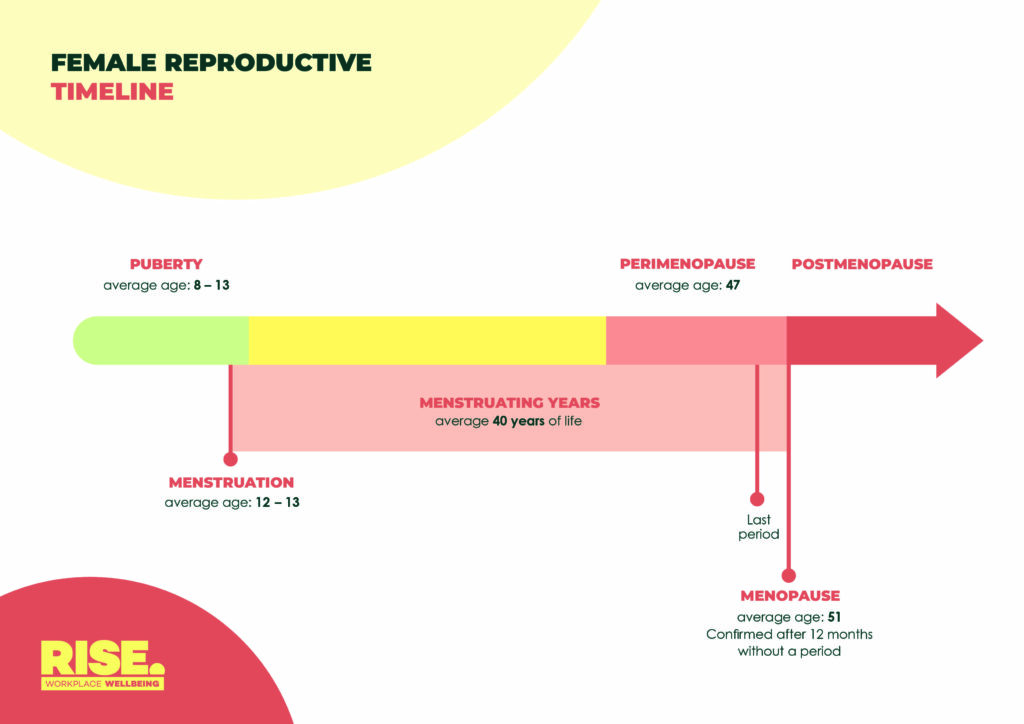
The menopause is a natural time of ageing and in the UK the average age is 51 years. But, around 1 in 100 people experience the menopause before the age of 40.
Whilst the majority of people going through menopause will be cisgender women, there are exceptions. Anyone born with a uterus, including trans men and non-binary employees, will experience the symptoms of menopause to the same degree as a cisgender woman. Creating an inclusive workplace starts with recognising and supporting everyone who is affected.
It is estimated that there are around 13 million people who are perimenopausal or menopausal in the UK, which is equivalent to one-third of the entire UK female population.
This means menopause is more than likely affecting your workforce.
Supporting employees through the menopause helps avoid tribunals
It’s not always easy to know where to start when supporting the wellbeing of women in the workplace, particularly when the experiences involved are so personal. While ignoring the issue might feel more comfortable, the consequences of doing nothing are too important to overlook.
According to the British Chamber of Commerce, the average cost of tribunals related to menopause is estimated to be £8,500 for employers. Management time also contributes to costs, as staff and management will need to manage the case, gather evidence and attend hearings.
There have already been successful tribunal cases where employers failed to consider the impact of menopause symptoms in the workplace properly. In fact, analysis of HM Courts & Tribunal Service data shows that the number of employment tribunals referencing menopause in the UK has more than tripled over the past two years.
Taking a proactive approach to menopause at work — including providing training and workshops for managers and employees experiencing symptoms — can significantly reduce the risk of tribunal claims.
We can help your organisation become menopause-friendly
Recent changes in the law and the introduction of the Employment Rights Act 2025 now mandate that employers with over 250 employees must publish Menopause Action Plans (MAPs) by Spring 2027 as part of wider gender equality action plans, with an expectation that smaller businesses also follow suit.
Our expertise can help you get ahead and set your employees and yourself up for success.
Don’t wait – act now and contact us
Find out more about how our menopause toolkit, training and e-learning can can help you on your menopause journey. Or contact us now:

